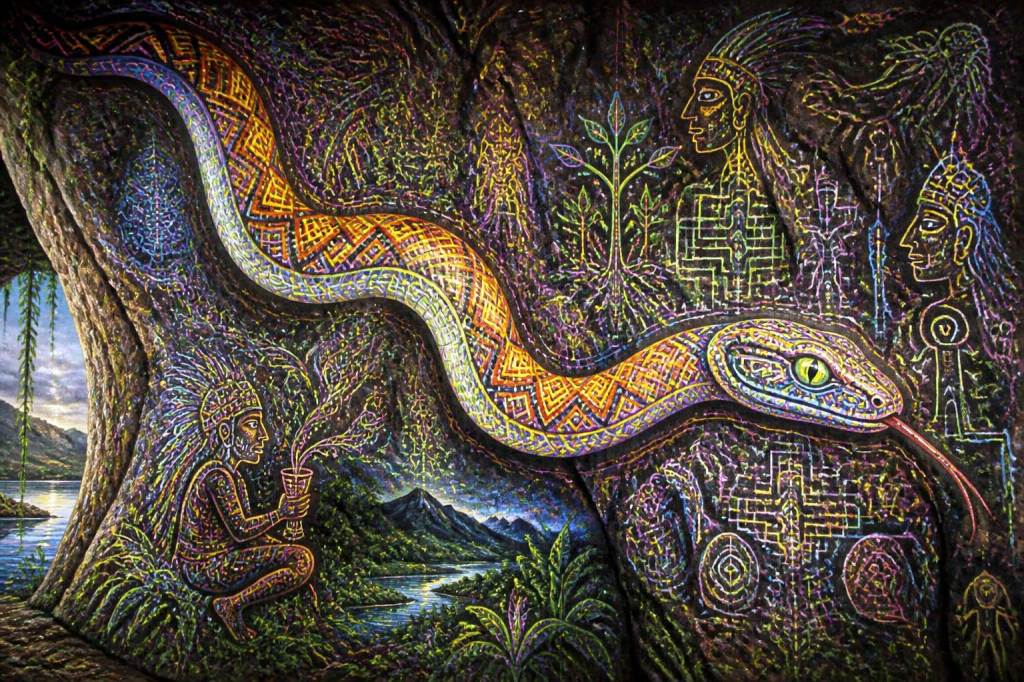
We try so hard to find a way of life for ourselves that works well and smoothly. However, it never does. There’s always a glitch in the matrix; a ghost in the machine, a demon ex machina if you like. And it will always be so until we re-establish the ages-old covenant with those great gods who fertilise all that is born, grows and dies on this planet, and that is the dragons and the serpents.
This covenant used to be maintained by the sacred arts, most notably dance. The most ancient indigenous folk music carries the rhythms and the vibrational frequencies that the serpent of that specific land recognises. It is a call sign, to bring the land wights into communion with the humans, to honour the sacred covenant between them.
The land was always jointly governed in this way and both sides – spirits and human – took their guardianship duties seriously. Of particular importance was the purification of the energies, to keep the portals clear between the liminal walls dividing the dimensions. The regular ritual of Beating the Bounds is probably the last vestige of this practice.
Most folk dances across the world originated from these sacred rites. The rhythms tapped out with drums and feet emit vibrations and frequencies that build a kind of audio sacred geometrical architecture that reaches into the Other Worlds. Think of the Irish tap dances, the Scottish reels mimicking how the serpent travels, the clog dances of the Dutch, the rattling of tribal shamans, the Indian Nataraja or Lord of the Dance… even the English Morris dancers make much of clicking their sticks.
Then there’s the flamenco, which began as a fertility dance that honoured the serpent by mirroring its characteristics. Notice the arched-back and coiled body of the dancer, the long serpentine tail in the train of her dress, her castanets mimicking the sound of the rattlesnake and her black lace with a texture reminiscent of dragon’s scales.
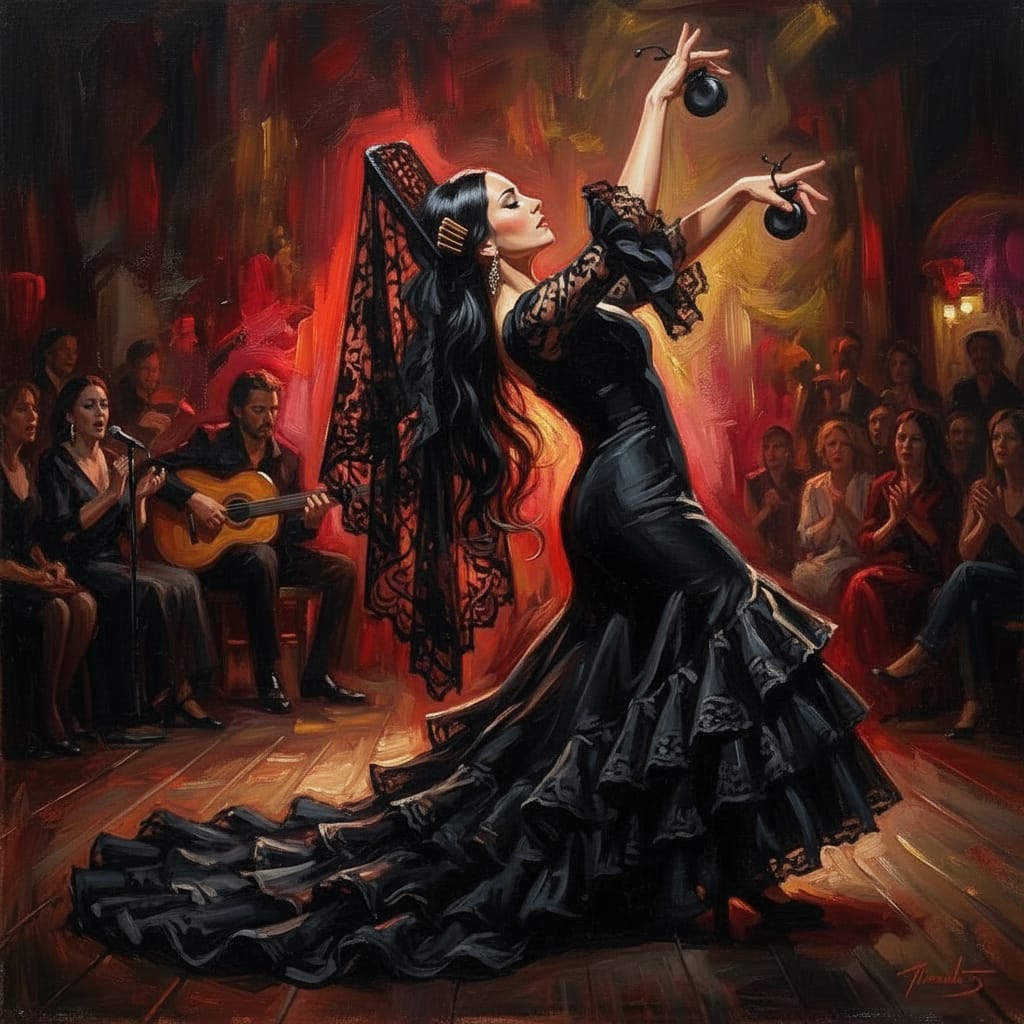
When performed properly by those still in touch with their indigenous roots, flamenco music has a sort of threatening or menacing undercurrent, a sense of warning to be careful where you tread. And the faces of the dancers are serious and determined, as if intent on a mission only they know.
Even the black mantilla lace veil and the high combs (peinetas) which hold it make more sense when we know that root of this dance is ancient sacred theatre that is from the same fountain spring as that of the Mesoamerican Aztecs, whose god was Quetzacoatl, the winged serpent was associated with the fertility of the land.
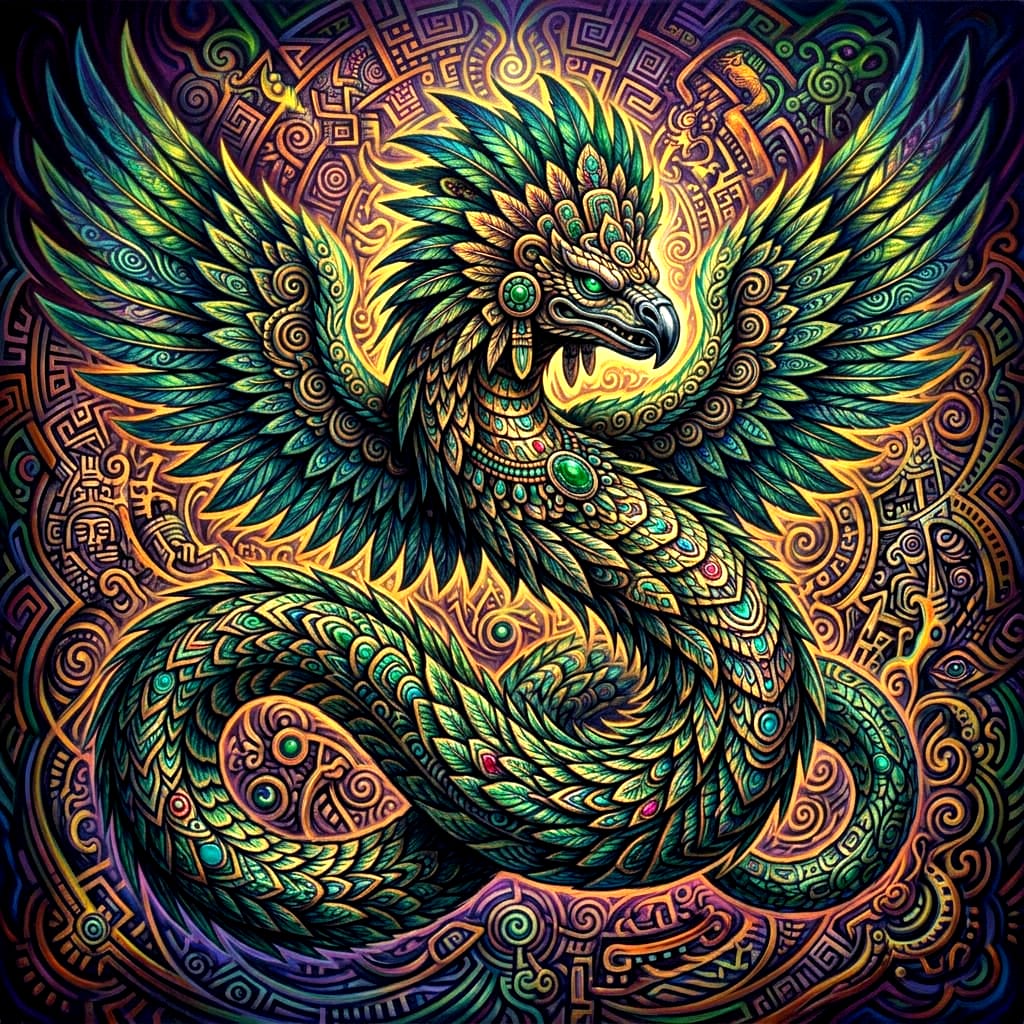
Quetzacoatl was said to give off a rattlesnake sound, which would be mimicked by the castanets. And he has a high feathered head-dress, which the high combs (peinetas) of the lace mantilla resemble.
All of which is to say that those pursuing The Way, who wish for the power to raise the Kundalini serpents within themselves, need to be first in covenant with these land spirits, in one way or another.
It is more than likely than if you are reading these words, the opportunities to honour this sacred bond are already being presented by your Dragon spirit guide.
You have just been reading an extract from my latest book, The Way of the Serpent, which will be out in a few months time.
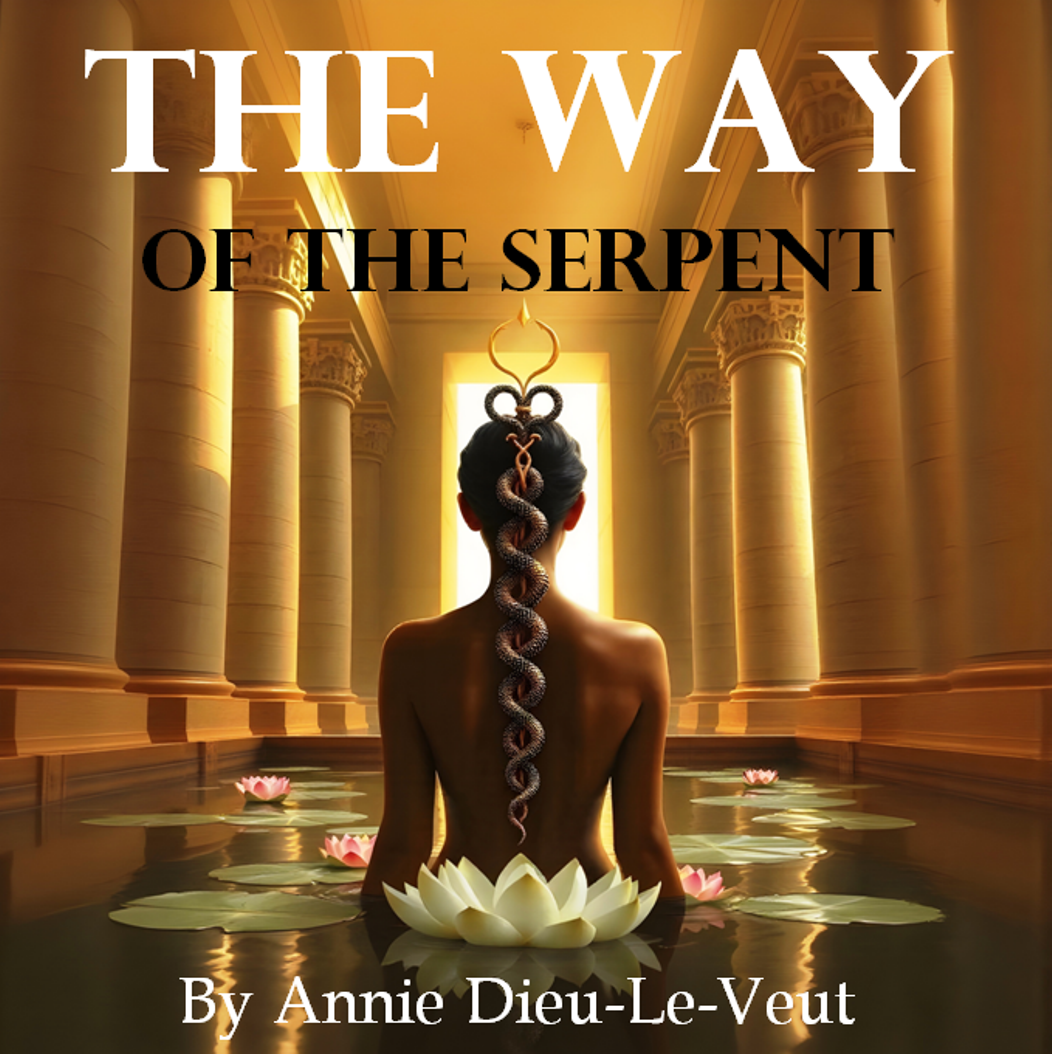
In a world starved of true feminine mystery, one path to immortality has remained hidden for millennia — until now. This long-awaited sequel to the bestselling The Sacred Sex Rites of Ishtar reveals the deeper secrets of sacred love magic. Shaman and visionary initiate Annie Dieu-Le-Veut shares the profound realisation that the ancient art of raising Kundalini cannot be safely undertaken without the direct initiation, guidance and lifelong support of the serpent spirits themselves. No human teacher, workshop or quick-fix shaman can bestow this transmission. Only the serpents can navigate the twisting, snaking “rollercoaster of the gods” — the ecstatic highs, inevitable shadow confrontations and soul-deep trials that lead to conscious immortality through love. Written especially for women already walking The Way — often alone and unsupported — this book restores the lost feminine current of sacred sex. It honours the receptive power of the yoni, the ancient role of priestess-nuns as Brides of the Divine, and the unique alchemy available only to the female soul. Drawing on shamanic trance teachings, historical wisdom and the eternal truth that “Love is the solution” to death itself, it offers support, validation and practical insights for riding the rigours of the path. If you feel the dragons calling, this is your companion on the journey home to immortality through sacred love.



Comments