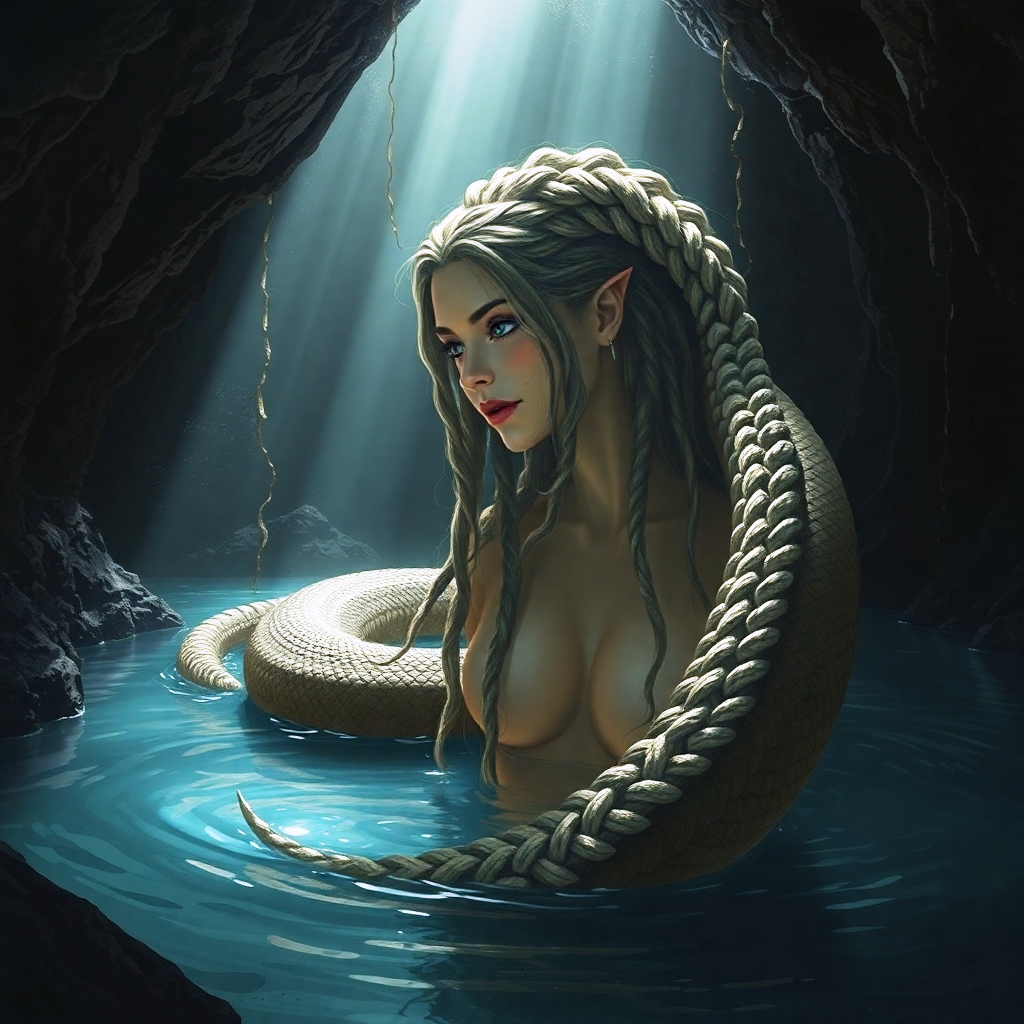
I’ve had people come to me seeking help with stuck Kundalinis, which causes them no end of health issues. That’s because pursuing enlightenment through trying to raise that precious, sacred serpentine force without the initiation of the Serpent peoples is, if you ask me, tantamount to putting the cart before the horse.
You can attend as many as Tantra retreats as you like; you can run the microcosmic orbit of the Tao every single day. But until you receive the blessings of those who have always held the true crown of Sovereignty in their gift, there is no way your own crown is going to light up with the dragon fire.
However, I appreciate the difficulty. The serpent has been demonised to such an extent that almost no literature exists describing his vital role in sacred sex rites. The only books I can find on the subject of serpent cults were written by those intent on making the case that they are Satan and were responsible for the Fall of Man. The truth is quite the opposite.
For most of human existence, over millions of years before the advent of Christianity, the serpent was honoured, worshipped and consulted for its wisdom by most civilisations of Earth.
It was a time when the wise understood that immortality, alongside the sovereignty of the land, was solely in the gift of the spirits, the winged messengers, the seraphs, the serpents of the seas that cover this planet.
These sea serpent gods had names like Poseidon, Neptune, Manawyddan and Njoror. We know those gods only in human form because that’s all that was allowed to remain after Patrick, and other “saints”, banished all memory of the serpents from the face of the Earth.
The “serpent cults”, as they are called, were eradicated by those who wanted us to believe a different story. They replaced the imagery of the snake hanging on the cross of the equinoxes and solstices with a man hanging on the cross of Calvary.
Then they told us that humans would be the crown of the creation were they only able and willing to repent from their Original Sin. By “they”, I mean Constantine, along with a succession of Roman emperors who selected a few of the Gnostic scriptures to provide the foundation for the New Testament, the new religion with which to cement their burgeoning empire.
The story is told in different ways. But basically, Constantine gained power in 312 C.E. after being victorious in a pivotal battle that he had not been expected to win. Beforehand, he claimed, a symbol had appeared to him in front of the Sun, with the words, in Greek characters, “Εν τούτῳ Νίκα!” (“In this, conquer!”) So he had given instructions to his soldiers to paint that sign on their shields, and the rest is history.
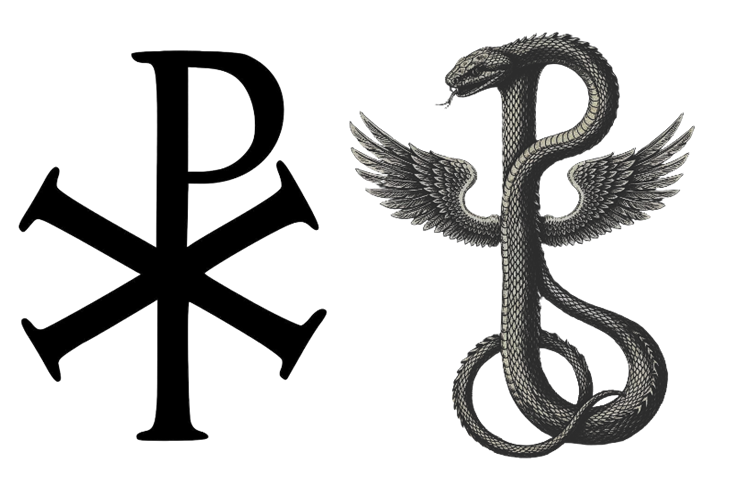
The symbol became known as the Chi Rho. Constantine, despite the Greek language that accompanied the symbol in his vision, insisted that it came from Jesus, and famously remained a “pagan” for the rest of his life. The syllable ‘Chi’ we were told, meant Christ. The only trouble with that line is that identical symbols have been found in religious iconography dated to long before the Christian era… an era in which the serpent was worshipped as god, and addressed as “Lord”.
To me, the Chi Rho looks like a stylised winged serpent. Tell me what you think in the comments.
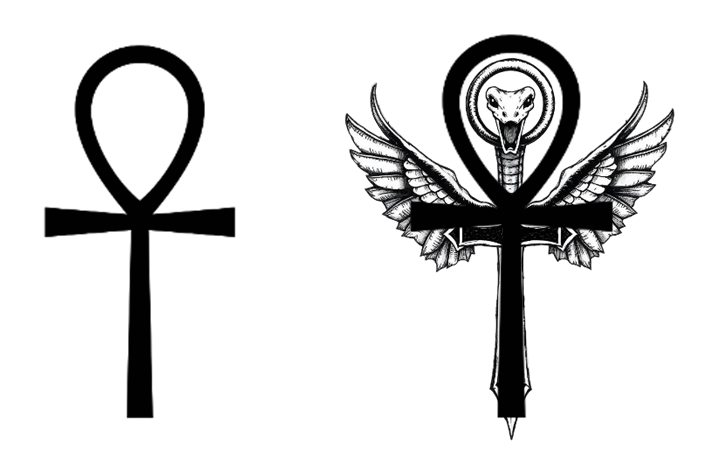
The ancient Egyptian Ankh is very serpent-like, too. Certainly it was considered to be a symbol that conferred immortality by those in ancient Egypt who worshipped Wadjet, a cobra goddess and protector of the Pharaoh.
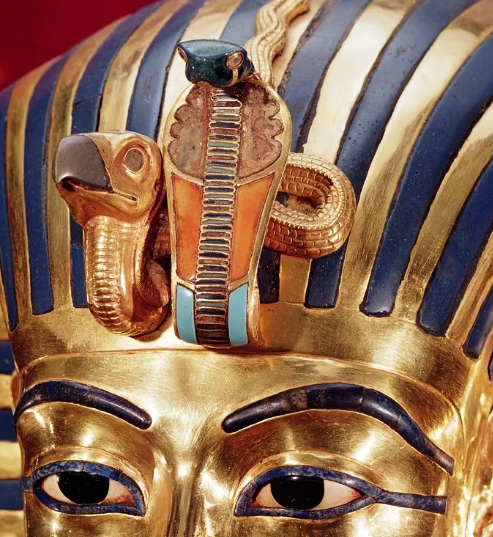
You may have noticed that the death mask of the Egyptian Tutankhamun has two snakes arising from the crown. This vital symbolism would have been well understood during those times. Unless the serpents (aka the Kundalini) had been awakened in him, no king or pharaoh was allowed to rule the kingdom because he did not have sufficient wisdom, and thus permission, to do so. He had to have the blessings of the serpents.
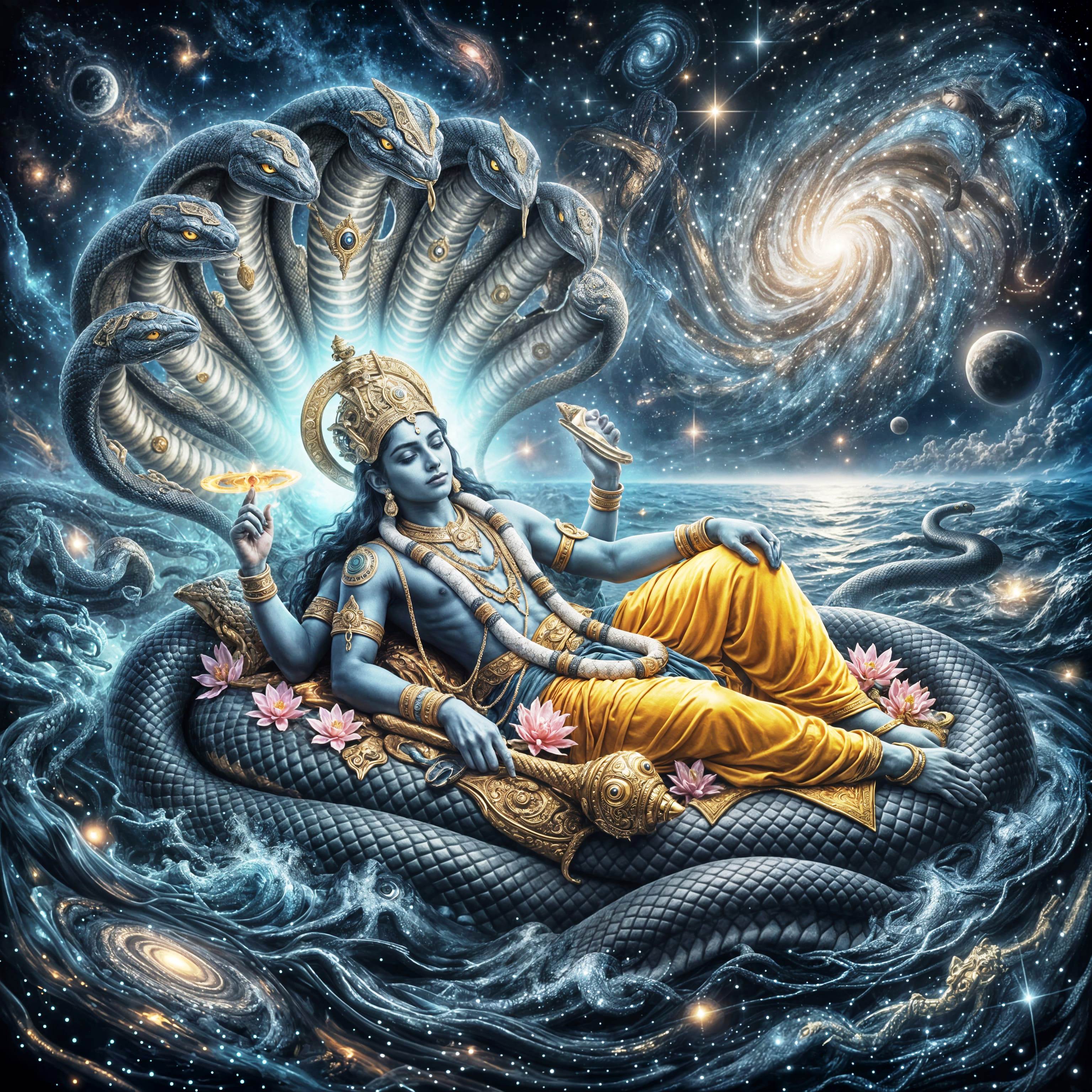
Thankfully, the civilisations of the Far East managed to avoid the brainwashing of the Roman Christian empire, and kept their serpents alive in folk memories. For instance, there is Ryūjin, the Japanese dragon sea god who lives in a coral mansion under the waves. The Indian god Vishnu sleeps on the coils of Sesha, his serpent, on the Garbhodaka Ocean, as he dreams the creation into existence. In Hinduism and Buddhism, nagas (snakes) remain revered even today as powerful spiritual guardians.
And so how would this serpent initiation be achieved? It is through the shamanic journey. A shaman type was required to initiate the king. She was a “cunning woman” that acted as the conduit between the serpents. She was a sacred whore, a pythoness and the true queen behind the throne.
The cunning woman had many different titles throughout the world: hierodule, Vestal Virgin, sacred prostitute. In Anglo-Saxon tribes, the cunning woman was known as a cuen which comes from the same root source as our word “queen” …alongside other sex-related words.
The cuen did not need to wear a crown on her head because she was already bright-browed; her inner crown was already sparkling with the gold of the Sun and the diamond light of the Moon. She did not require any anointing from the Archbishop of Canterbury because her innermost elixirs were already flowing like honeyed nectars throughout her whole being.
She is a shaman skilled in evoking and awakening the two energetic serpents which, during sexual intercourse, rise and interweave up through the human body, just as they do on a caduceus, to achieve the Marriage of the Sun and the Moon.
The purpose of this initiatory rite was — and still is — to charge up the inner fire that ignites the upper brain centres around the pineal gland. In this way, he brain lights up and we become become enlightened. Thus the wisdom to rule a land successfully always used to be bestowed.
The cuen was able to initiate the new sovereign because she was a conduit for the dragons of the land or the cuentry, who even today still hold its sovereignty in their gift, despite the comings and goings of various political leaders and conquerors on the world stage.
These shapeshifting tricksters are so wise and intelligent that it would take much more than a changing religious regime or ideology to eradicate them from the Earth.
They have many different names in different cultures all over the world – but in the British Isles, the serpents have squirrelled themselves away under the covers of folk stories about Elves. Yes, that’s right… well, it’s been my experience anyway, that the dragon lore has been hidden in orally transmitted folktales and myths that have eventually become fairy tales.
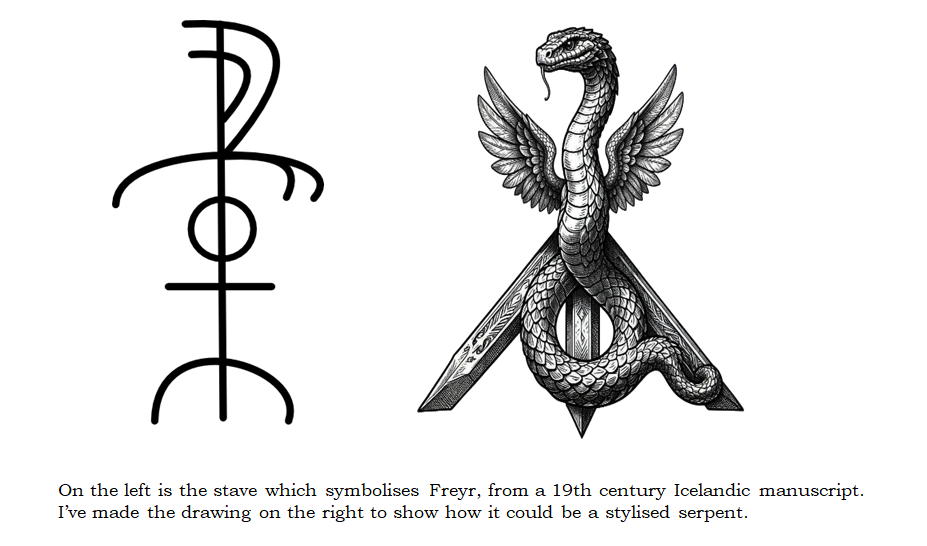
The Elf (or Alf) most connected with love-making and Sovereignty across European countries is the son of the Norse god of the sea, Njoror. He is named Freyr and he is the twin brother of Freyja, the goddess of love, beauty and war. His name was always evoked in rites pertaining to kingship, fertility, peace, prosperity, fair weather, good harvests, virility and abundance.
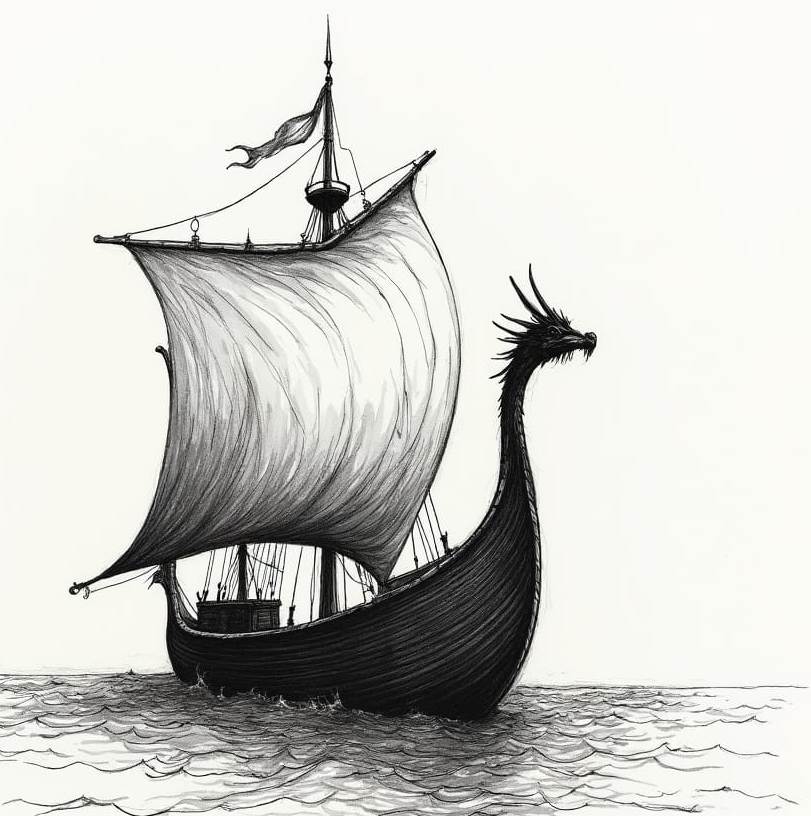
Freyr is found in the Old Norse Poetic Edda as the leader of the Light Elves of Alfheim. He was almost certainly J. S. S. Tolkein’s inspiration for Elrond, the Master of Rivendell, in Lord of the Rings. And the epic tale’s dwarves of Moria are remarkably similar to the dark elves of the Underworld Svarthalfheim, who crafted Freyr’s magical dragon-prowed ship, enchanted sword and shining, golden-maned boar.
That the Anglo-Saxon king Alfred the Great was thus initiated into this wisdom seems highly likely from the evidence of his geomythic knowledge that it is believed, helped him to win a pivotal battle against the Vikings. But the Old English spelling of his very name indicates that comes from an ancient Elf-inspired lineage.
Ælfrēd meant “elf counsellor”. His father was named Æthelwulf (“elf wolf”) and his three brothers were named Æthelbald, Æthelberht and Æthelred, who all reigned over much of England in turn before Alfred.
Alfred named his daughter Ælgyva, which meant “gift of the elves”. Our word “gift” derives from the Old Norse rune gyva, otherwise known as gebo or gifu.
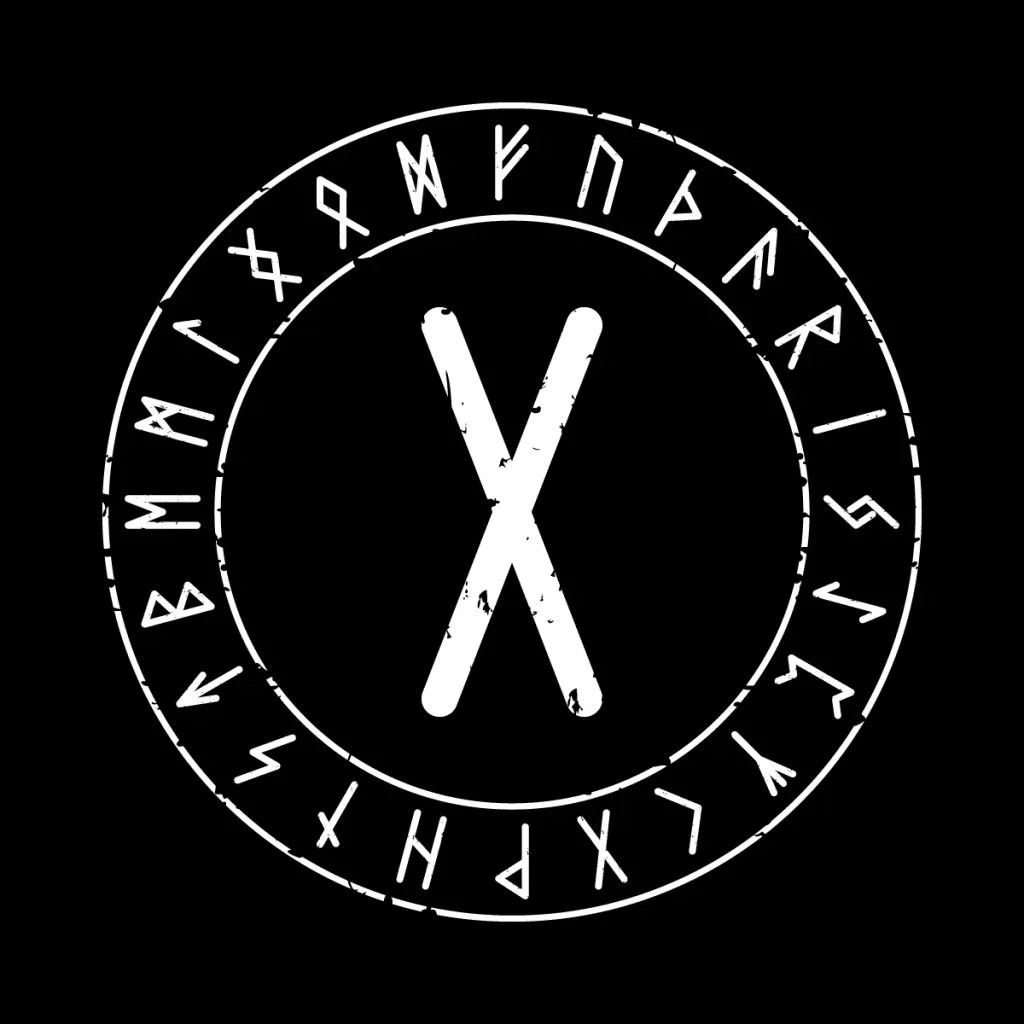
It is the same X found on the Chi Rho. Once you know the deeper meaning of this rune you can appreciate the two-way high road of reciprocative songlines that lead the cuen through the portals into Alfheim, the world of the Elves.
This boon or gift is won through offerings based on gratitude and love between the cuen and the spirits of the seas. By ‘love’, I don’t mean the sentimental, dove-like ‘love’ that we learned about as children from Hollywood movies. The love between the Elves and the cuen is more like a serpent or dragon in its ferocity and tenacity … and it burns with the passionately raging flame of eternal love.
You have just been reading an extract from my next book, which is the sequel to The Sacred Sex Rites of Ishtar. It’s called The Way: Immortality through Sacred Love Magic and it should be published by summer. Please do contact me if you’d like to notified when it is out.


 Annie Dieu-Le-Veut
Comments