Then look into the sky where through
The clouds a path is torn,
Look, and see her, how she sparkles
It’s the last unicorn.Palaces of Montezuma by Grinderman
There’s a lot of New Age nonsense talked about unicorns, which I don’t subscribe to. But apart from all that, I can tell you that unicorns are real … just not in this Earthly realm. Over the years, I’ve been led on quite the merry ride, to help me understand what my spirits wanted to teach me about the magical meaning of these enchantingly-evocative, one-horned creatures.
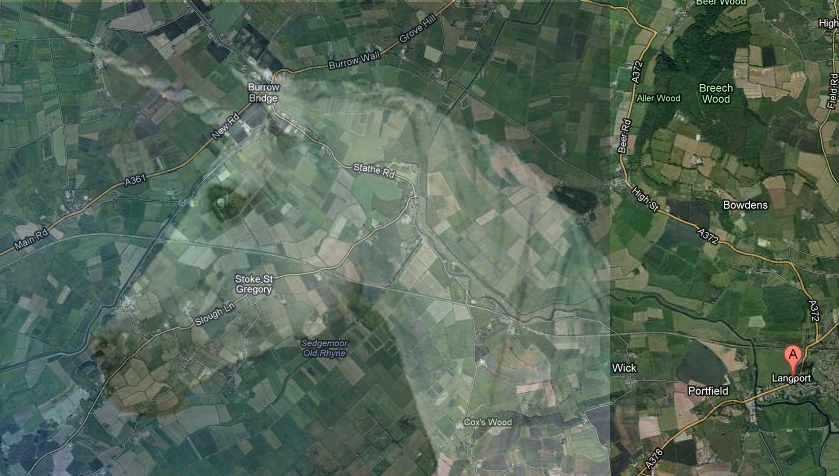
My travels, at one point, took me to this landscape earthwork of a unicorn near the royal town of Langport where I fed it with the ashes of my Samhain fire.
My journey with the unicorn began in 2015, when I began to understand that my shamanic role here on the land was connected to the sovereignty of these British Isles, and that sovereignty is more than about politics and nationalism…a lot more.
The shamans of old knew that when indigenous tribes are moved off the lands where their ancestors are buried, that banishment only occurs as a result of them losing shamanic traditions, and thus the connections to the As Above, So Below consciousness. They’ve lost their place – in their minds at least – in the eternal dance of the cosmic wheel, and this weakens them.
Sovereignty begins life in the heart. It is a spiritual or shamanic force that erupts like a live-giving fountain when the people are rooted into right-relationship with the land and the stars. Then they stand as tall and firm as oak trees to withstand the strongest winds of change, and their stout trunks and spreading branches provide homes for many living creatures.
The fertile tree of Sovereignty is the fruit of an alchemical process called the Marriage of the Sun and the Moon. And in medieval alchemical art, which includes the famous 14th century Unicorn Tapestries, the white unicorn represents the Moon.
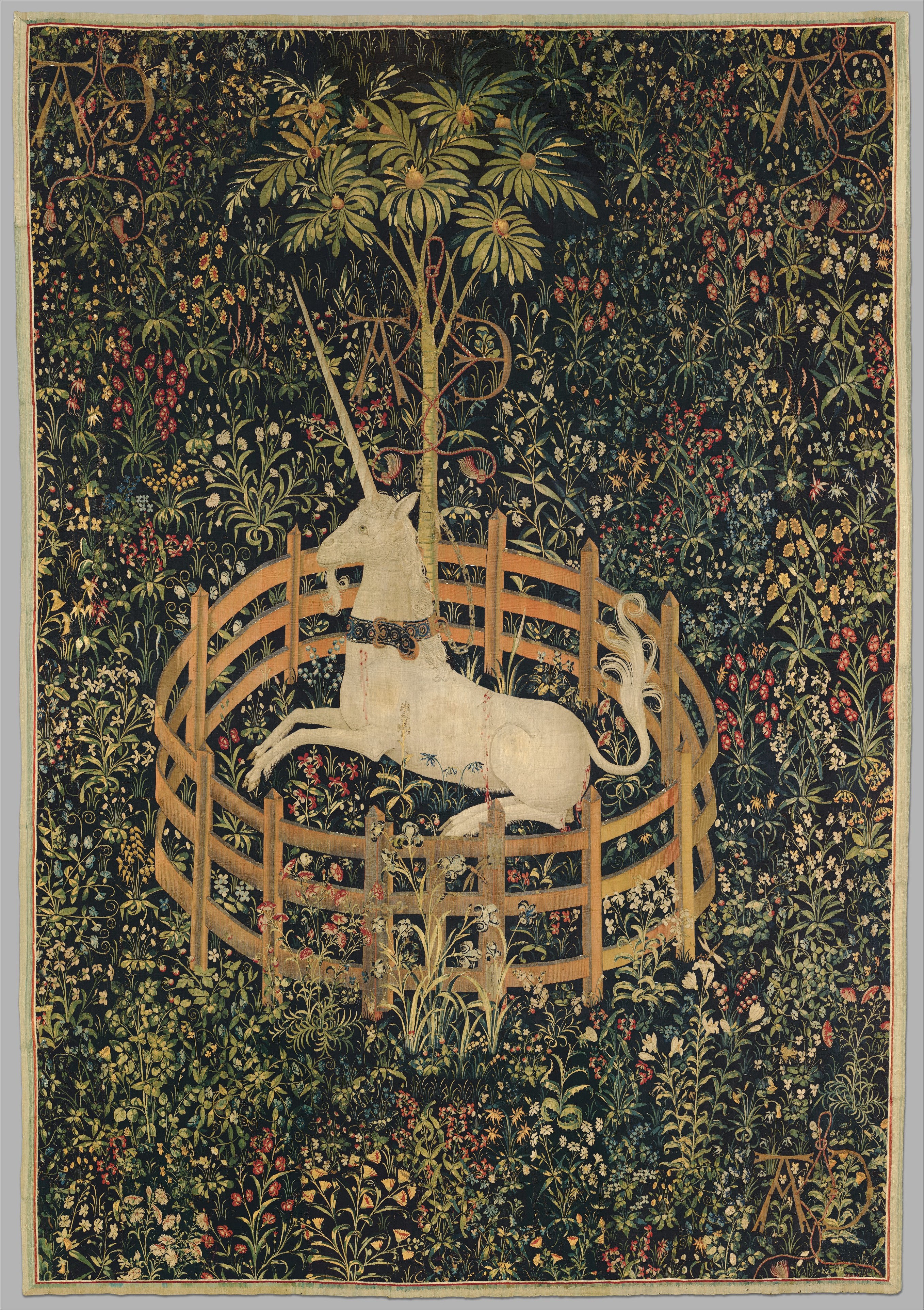
In the Met Museum’s page on the final frame of the Unicorn Tapestries (above), someone who understands alchemical symbolism has written this:
“… In this instance, the unicorn probably represents the beloved tamed. He is tethered to a tree and constrained by a fence, but the chain is not secure and the fence is low enough to leap over: The unicorn could escape if he wished.“Clearly, however, his confinement is a happy one, to which the ripe, seed-laden pomegranates in the tree—a medieval symbol of fertility and marriage—testify. The red stains on his flank do not appear to be blood, as there are no visible wounds like those in the hunting series; rather, they represent juice dripping from bursting pomegranates above.
“Many of the other plants represented here, such as wild orchid, bistort, and thistle, echo this theme of marriage and procreation: they were acclaimed in the Middle Ages as fertility aids for both men and women. Even the little frog, nestled among the violets at the lower right, was cited by medieval writers for its noisy mating.”
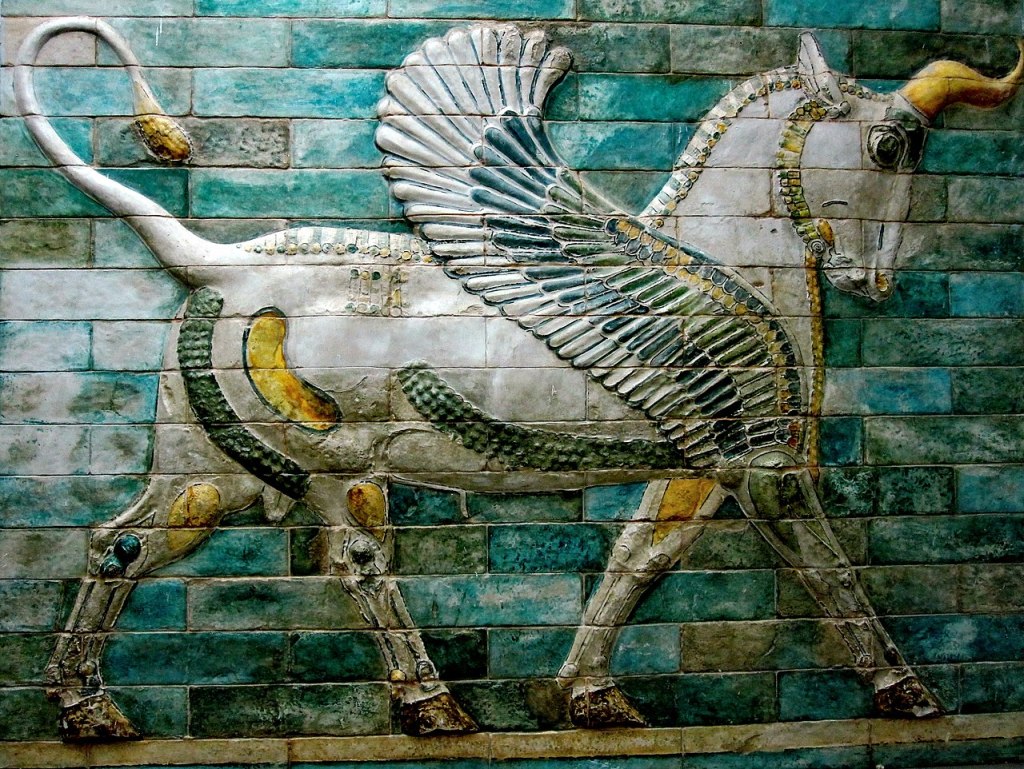
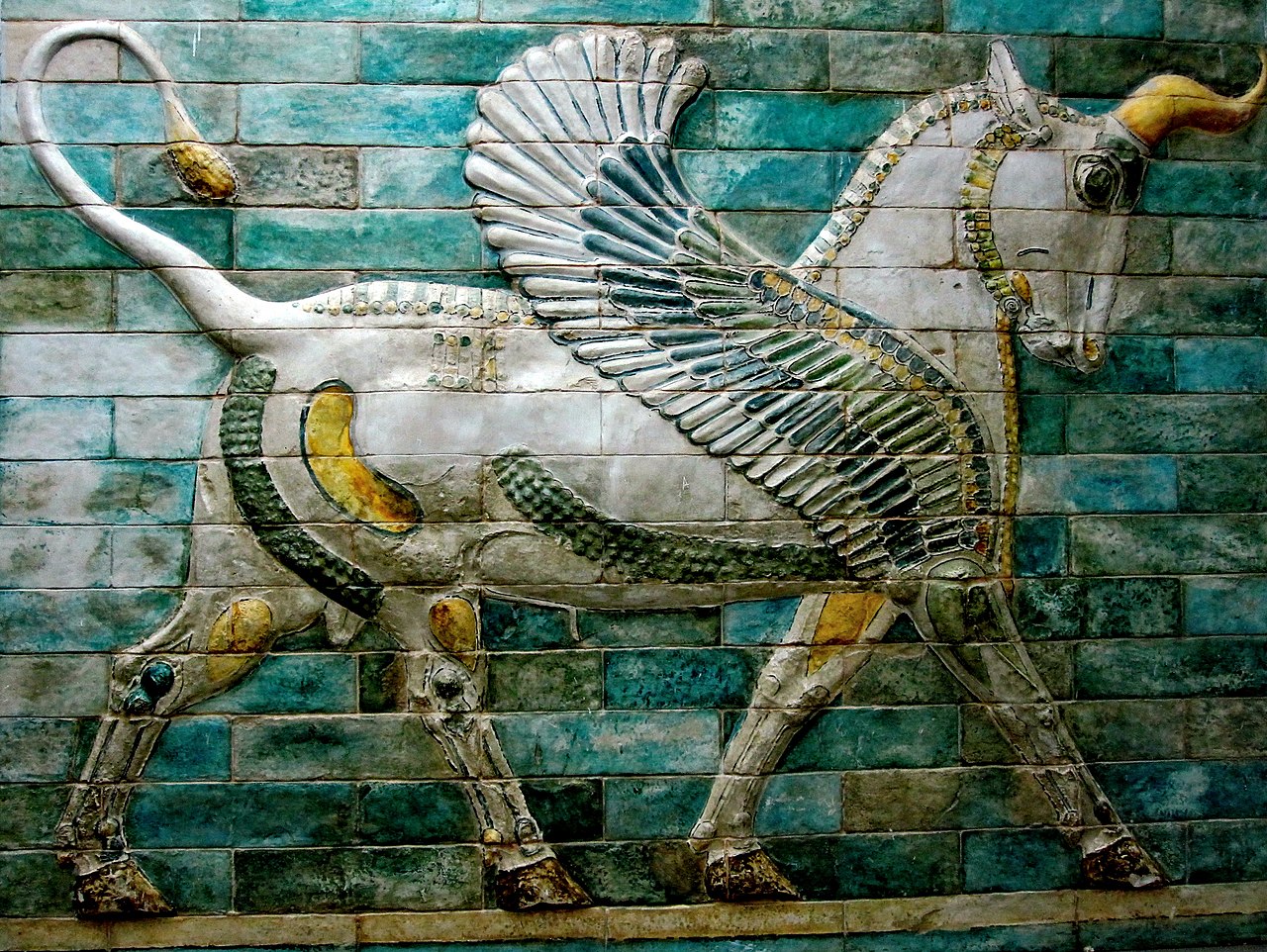
Unicorns exist in art and literature as far back as the Babylonians, as shown by this gorgeous creature on Ishtar’s Gate in Babylon.
But it wasn’t until the 17th century that the unicorn constellation was discovered sparkling in the stars by Dutch theologian, geographer and astronomer Petrus Plancius. He named it Monoceros (one horned). And so that is what the lyrics of the Grinderman song are about.
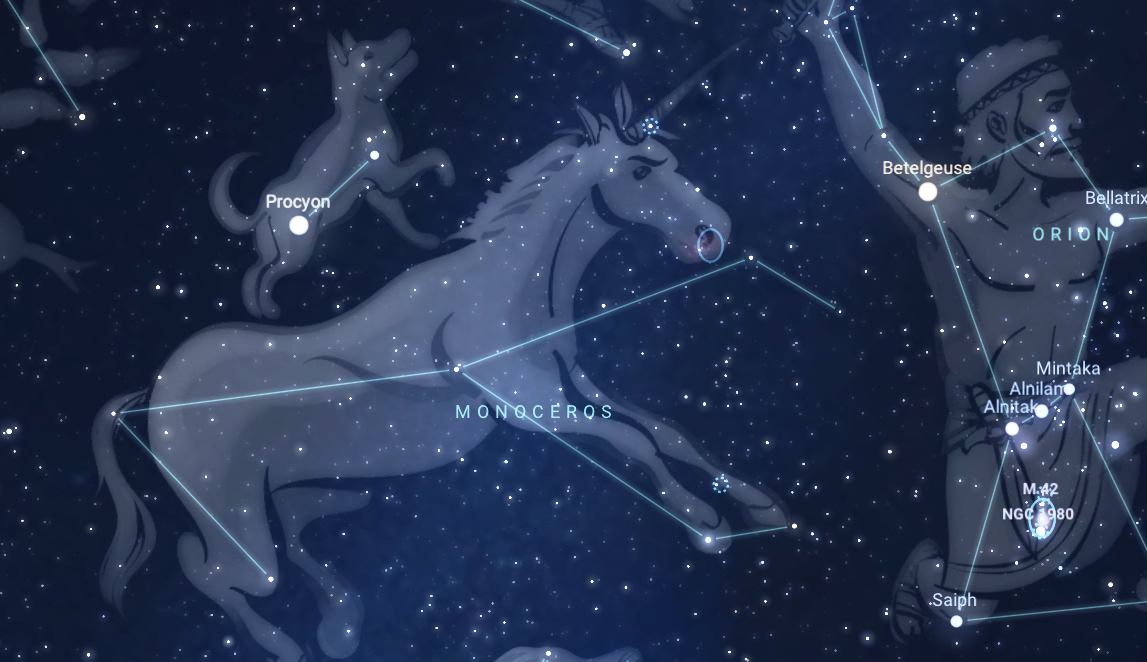
However, the presence of the unicorn in symbolic artwork had already begun in medieval Europe a couple of centuries before Plancius’s discovery, and I believe its purpose was to give the alchemists and astrologer/astronomers of the royal courts a means to occult their teachings in a way with which Christians could also engage.
Even today, Christians associate the Unicorn with the Annunciation of the Virgin Mary, when the angel Gabriel visited Mary to “tell her” that she would give birth to Jesus, and they cite the medieval imagery of the Unicorn in a garden with a virgin. But there was a lion too, and the garden is actually the garden of the stars, the AsGARD of the Upper World of the Saxon/Norse peoples.
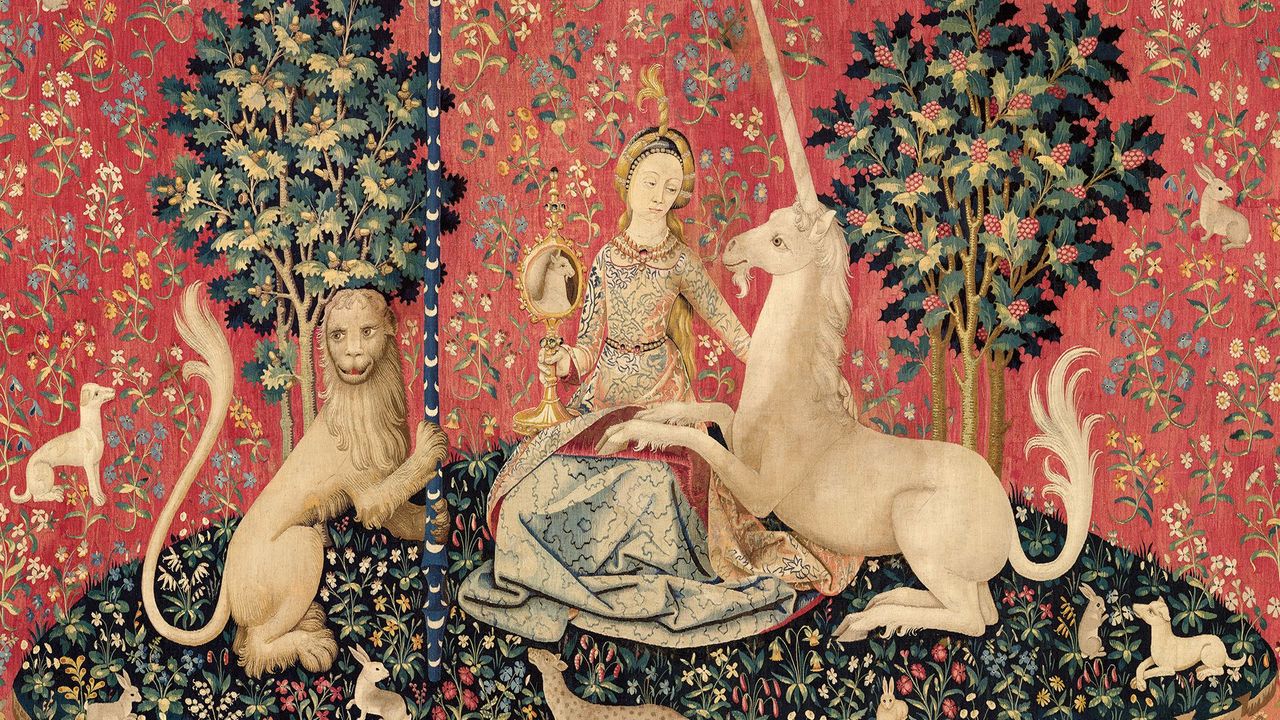
The above photo is of the famed Lady and the Unicorn tapestry, which was woven from silk and wool in Flanders around the 16th century and is now housed in the Cluny Museum in Paris. But I wonder …Is that a little dog, Canis Minor, on that tapestry, down to our right? And Lepus the Hare? If so, it would reflect the garden of the stars.
It would have been the alchemists of the royal court of Elizabeth 1, like John Dee, and then James 1st, who used Monoceros to come up with the magical heraldry of the British Isles, in which the Lion (Sun) and Unicorn (Moon) are in harmony and symbolising the ‘happy marriage’ between the newly united England and Scotland, as shown below.

You will probably have heard the old English rhyme?
The lion and the unicorn
Were fighting for the crown
The lion beat the unicorn
All around the town.
Some gave them white bread,
And some gave them brown;
Some gave them plum cake
and drummed them out of town
What does the song mean – ‘fighting for the crown’? Well, it’s not so much a ‘fight’ as an alchemical process which includes great agitation between two opposing forces, and which ends in the Marriage of the Sun and the Moon that takes place across dimensions, and leads to the transmission of Sovereignty.
The alchemical Marriage of the Sun and the Moon, as a prerequisite for Sovereignty and the fertility of the land, is such a huge topic that three of my books have it as their central theme, in different ways.
Stories in the Stars is about how the Marriage of the Sun and the Moon is sung in the stars, Stories in the Summerlands is about how that stellar, alchemical marriage falls down on to the land of Somerset, and The Sacred Sex Rites of Ishtar is about how the Marriage of the Sun and Moon is achieved between two shamanically-inclined lovers, within the human body.


 Annie Dieu-Le-Veut
Comments